
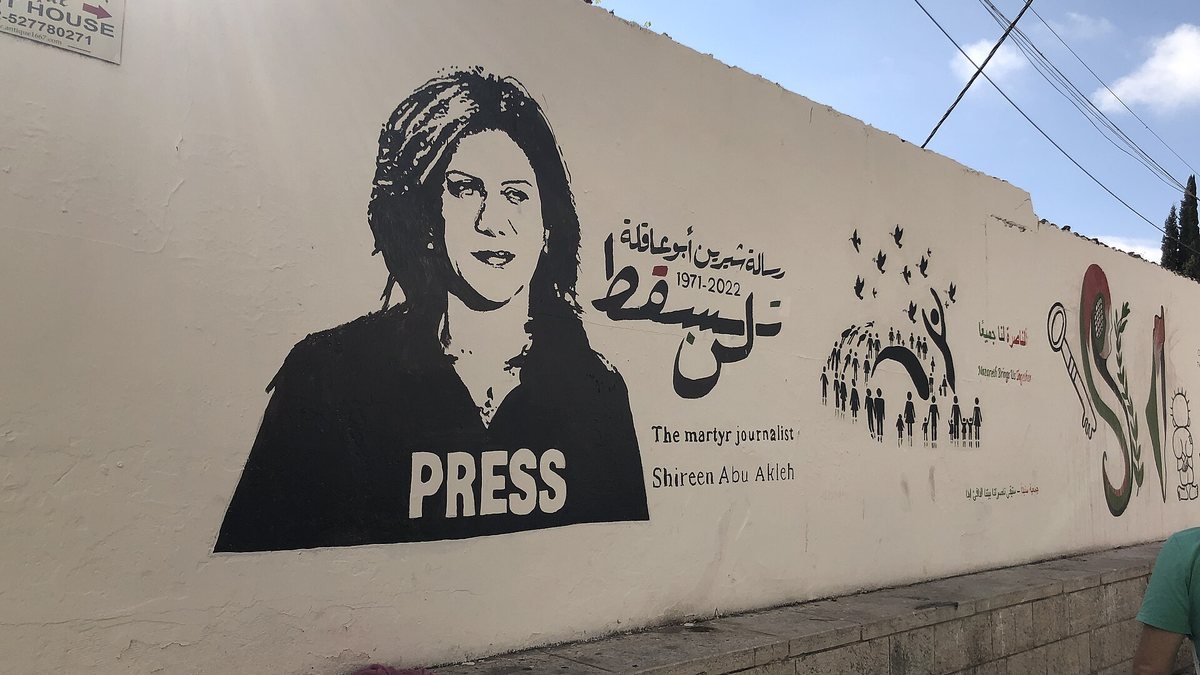
In this review, Global Press Shield looks at the main developments for Palestinian journalism in the week from 11 to 18 November 2026. One contrast sums it up: on the day the world heard the UN Secretary-General say that what Palestinian journalists have suffered is unprecedented in the organisation's history, a Palestinian photographer was beaten until his bones broke in Jericho for documenting a crime.
1. A UN testimony: "the deadliest conflict for journalists"
In his message to the UN International Media Seminar on Peace in the Middle East, held in Vienna on 16 November, Secretary-General António Guterres called the war on Gaza "the deadliest conflict for journalists since the founding of the United Nations", called for prompt and impartial investigations and accountability, and urged that restrictions on international journalists' access to Gaza be lifted.
The next day the Palestinian Journalists Syndicate welcomed the statement and demanded accountability for Israel and independent international investigations. Read more.
2. Jericho: fractures, bruises and six hours in detention for a WAFA photographer
At dawn on 17 November, Israeli soldiers severely beat WAFA photographer Suleiman Abu Srour as he covered the aftermath of a settler attack on al-Dyuk al-Tahta, west of Jericho, which killed a Palestinian woman and wounded ten others. Abu Srour suffered fractures and bruises, was held for more than six hours, and had his phone seized. Read more.
3. Masafer Yatta: six hours of beatings and death threats
South of Hebron, journalist and activist Mohammed Hisham Hreini said Israeli soldiers raided his home in Masafer Yatta and held him for about six hours, during which he was beaten and threatened with death, and seized his phone, according to his testimony published on 15 November. His account comes from an area where journalists and activists are routinely prevented from documenting demolitions and displacement.
4. The figures: 45 journalists still in prison
In a report published on 12 November on journalists detained in the West Bank, Al Jazeera cited the Palestinian Journalists Syndicate as having documented 208 arrests of journalists since the war of genocide began more than three years ago, with 45 journalists still held in Israeli prisons.
Among the cases it describes: journalist Moath Amarneh, arrested for the third time on 10 September and placed in administrative detention for four months, bringing his time in prison since the war began to twenty months; and journalist Usaid Amarneh, whose administrative detention was extended by six months.
This comes just two weeks after the re-arrest of journalist Samer Khuweira in Nablus, and of journalist Hazem Nasser in Tulkarm two weeks after he left more than two years of administrative detention.
5. Gaza: injured and sick journalists waiting for treatment
In Gaza, journalists continue to demand that their injured and sick colleagues be allowed to travel abroad for treatment. Among the cases the Syndicate has highlighted is journalist Ammar Qdeih, who was admitted to intensive care after a cardiac arrest, as the health system collapses and the crossings stay closed to patients who need specialist care.
Global Press Shield's reading
This week exposes the wide gap between what is said about Palestinian journalists and what is done to them. UN testimonies keep coming, from the Albanese report to the Secretary-General's message, while on the ground the same pattern we recorded during the olive harvest weeks continues: settlers attack, soldiers protect them, and then whoever came to document is beaten and detained.
Global Press Shield calls for:
- the release of the 45 journalists in detention, and an end to the use of administrative detention against them;
- an independent investigation into the assaults on Suleiman Abu Srour and Mohammed Hreini, and accountability for those responsible;
- immediate permission for injured and sick journalists in Gaza to travel for treatment;
- turning the UN testimony into action: an independent international mechanism to preserve evidence, and Gaza opened to the international press.
We are also opening our doors to researchers and monitors to work with us documenting these violations, so that no journalist is left without a record.
Sources: Palestinian Journalists Syndicate, United Nations, WAFA news agency, Palestinian Broadcasting Corporation, Al Jazeera, Independent Arabia, Wattan News Agency.