
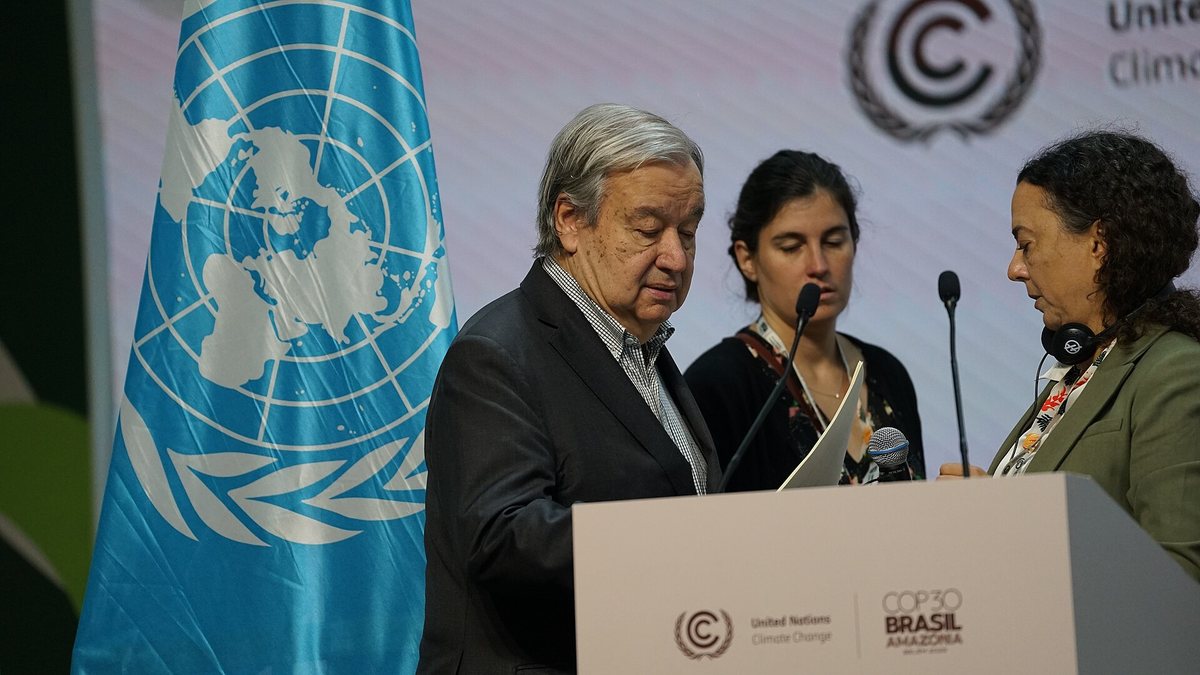
For Global Press Shield, the UN Secretary-General's description of the war on Gaza as "the deadliest conflict for journalists since the founding of the United Nations" is a historic testimony that must not remain words in a message. An organisation founded more than eighty years ago, which has witnessed the wars in Korea, Vietnam, the Balkans, Iraq and Syria, now acknowledges that what journalists have suffered in Gaza is unprecedented in its history. That acknowledgement places on the UN and its member states the responsibility to move from description to accountability.
What Guterres said
In his message to the UN International Media Seminar on Peace in the Middle East, held in Vienna on 16 November 2026, Secretary-General António Guterres said many Palestinian journalists in Gaza had been detained, attacked and killed simply for doing their work.
He called for prompt and impartial investigations into attacks on media workers and for those responsible to be held to account, and urged that restrictions on international journalists' access to Gaza be lifted. He stressed that journalists are civilians protected under international humanitarian law and must be allowed to work without interference, intimidation or harm, noting that journalists in the West Bank, including East Jerusalem, also face continuing threats and attacks.
The Syndicate: an international testimony that demands accountability
In a statement from its general secretariat on 17 November, the Palestinian Journalists Syndicate welcomed the Secretary-General's position as an important UN characterisation of the scale of the crime committed against Palestinian journalism during the war of genocide on Gaza.
The Syndicate said these crimes "did not happen in a vacuum" but in the context of Israel's occupation of Palestinian territory and its military assault on Gaza, and that Israel bears responsibility for the crimes its forces, agencies and settlers committed against Palestinian journalists: killing, targeting, arrest, assault, intimidation and the destruction of media outlets, offices and equipment.
It stressed that the protection international humanitarian law grants journalists "must not remain a merely theoretical commitment" but must become practical international action.
The Syndicate's demands
The Syndicate called on the UN and its member states to shoulder their legal and moral responsibilities and to work for:
- accountability for Israel and those responsible for killing and targeting Palestinian journalists;
- independent and transparent international investigations into every killing, arrest, torture and assault of journalists;
- an end to the policy of impunity that has encouraged the continued targeting of the press;
- opening Gaza immediately to journalists and international media;
- guaranteed freedom to work for Palestinian and international journalists in Gaza, the West Bank and East Jerusalem;
- real international protection for journalists as civilians.
It concluded that targeting journalists "is not a side effect of the war of genocide, but an attack on the right of Palestinian society and the world to know the truth", urging the international community not to stop at counting the journalists killed but to take serious steps towards justice.
From testimony to accountability
Global Press Shield joins the Syndicate's demands and notes that UN testimonies keep accumulating: from Special Rapporteur Francesca Albanese's report "Truth under the rubble" to the Secretary-General's message today. What is missing is not description but the political will to act on it: an independent international mechanism to preserve evidence, investigations that reach those responsible, and Gaza opened to the international press.
As we said on the International Day to End Impunity, justice delayed for the journalists who were killed is an open invitation to kill others.
Sources: Palestinian Journalists Syndicate, WAFA news agency, United Nations, Wattan News Agency.